




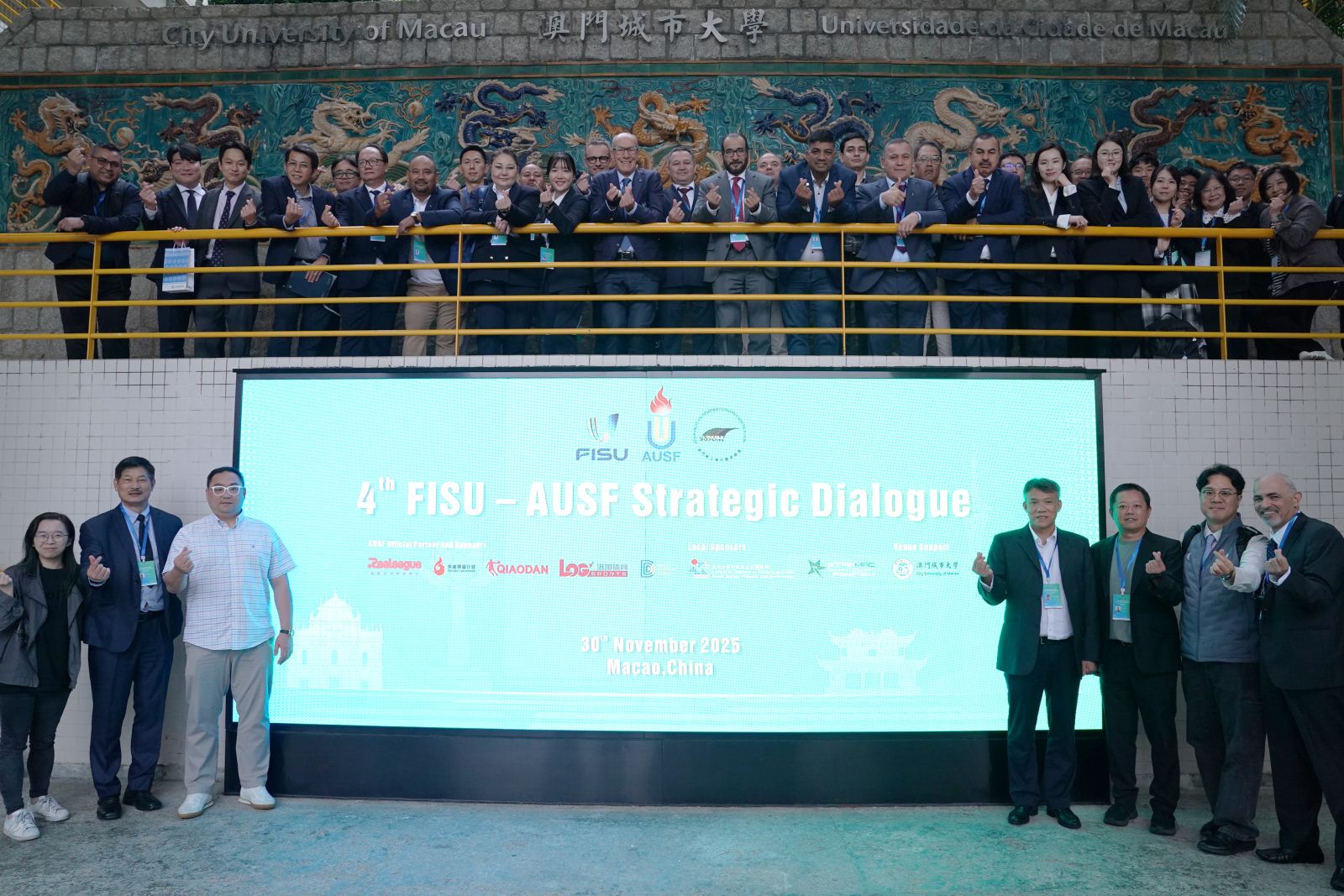
MACAO, China – The 4th FISU-AUSF Strategic Dialogue kicked off on 30 November 2025 at the City University of Macao.
Following a successful General Assembly, spirits were high as representatives from FISU and the AUSF Executive Committee and members gathered to discuss the current developments in the sports industry as well as future trends, all in the name of promoting university sport.
With six different speakers across two sessions, the key themes shared were collaboration, education and the use of AI to propel university sport forward.
AUSF Vice-President Dr Khalid Almuzaini was one of the speakers at the dialogue. In his speech, he stressed on the importance of collaboration between FISU and AUSF in building a global university sport network.
“Collaboration gives university sports one global voice,” he said. “When we invest strategically and collaborate globally, the impact goes far beyond the campus.”
As a professor at the King Saud University and the president of the Saudi Universities Sports Federation (SUSF), Dr Khalid has been proactively introducing initiatives in Saudi Arabia to improve its level of sporting excellence. However, he believes that such major change cannot be done individually and urges a joint effort between AUSF member countries and led by FISU.
To end his speech, he directed his proposal to FISU President Leonz Eder: “The formula for success is simple, Dr Leonz: investment, collaboration and sustainability to create a lasting impact, with you leading the way, working hand-in-hand.”
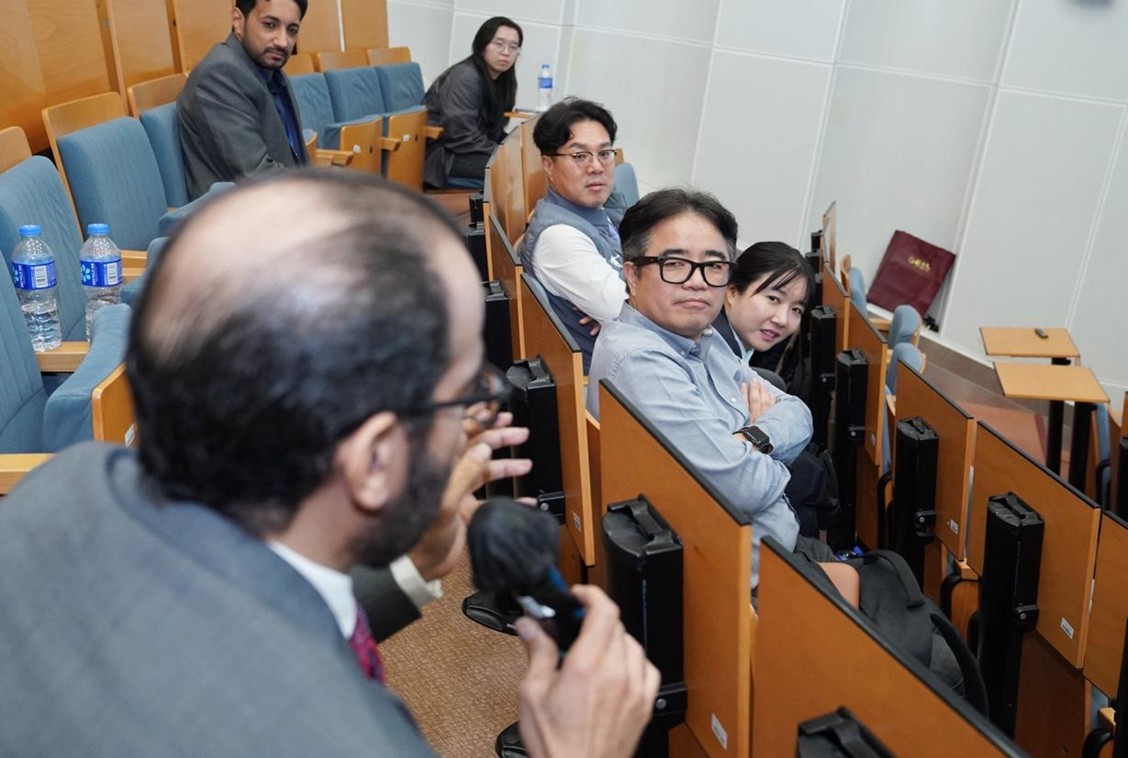
Collaboration in the form of education for students also plays an important role in moving university sport forward, as AUSC President Professor Mohamad Rusllim shared in his speech about the need to adapt new approaches in student education.
To kickstart his speech, he stated that “a new generation requires a new approach”. With the need to step up engagement efforts with ‘Gen Z’ students who are constantly on social media, he called upon members in attendance to learn from each other and strengthen collaboration.
He shared the adoption of an ‘integrated campus of the future’, an initiative that he leads in his capacity as the Deputy Vice-Chancellor at the Universiti Malaysia Pahang Al-Sultan Abdullah (UMPSA). This initiative is guided by UN’s SDG 4 of Quality Education and helps to support student-athletes financially and promote inclusivity.
He is confident that adopting such an initiative will “not only produce champions, but thinkers, creators and changemakers”.
In fact, FISU Secretary-General Matthias Remund endorsed this message and supported the need to provide a holistic education system for university students as they are the “leaders of tomorrow”.

“We are convinced that students and young people practising sport are the best promising leaders of tomorrow,” he mentioned.
Extending the conversation on education and growth, AI has become another key force driving development in university sports. Speakers from the Korean National Sport University, Professor Jiwun Yoon and Professor Ji-Yong Lee, shared about how AI is currently used in university sports and encouraged members in attendance to utilize AI for good.
Practical applications of AI in university sport include AI-assisted judging system in competitions, performance analytics, doping substance detection and sponsor logo exposure detection.
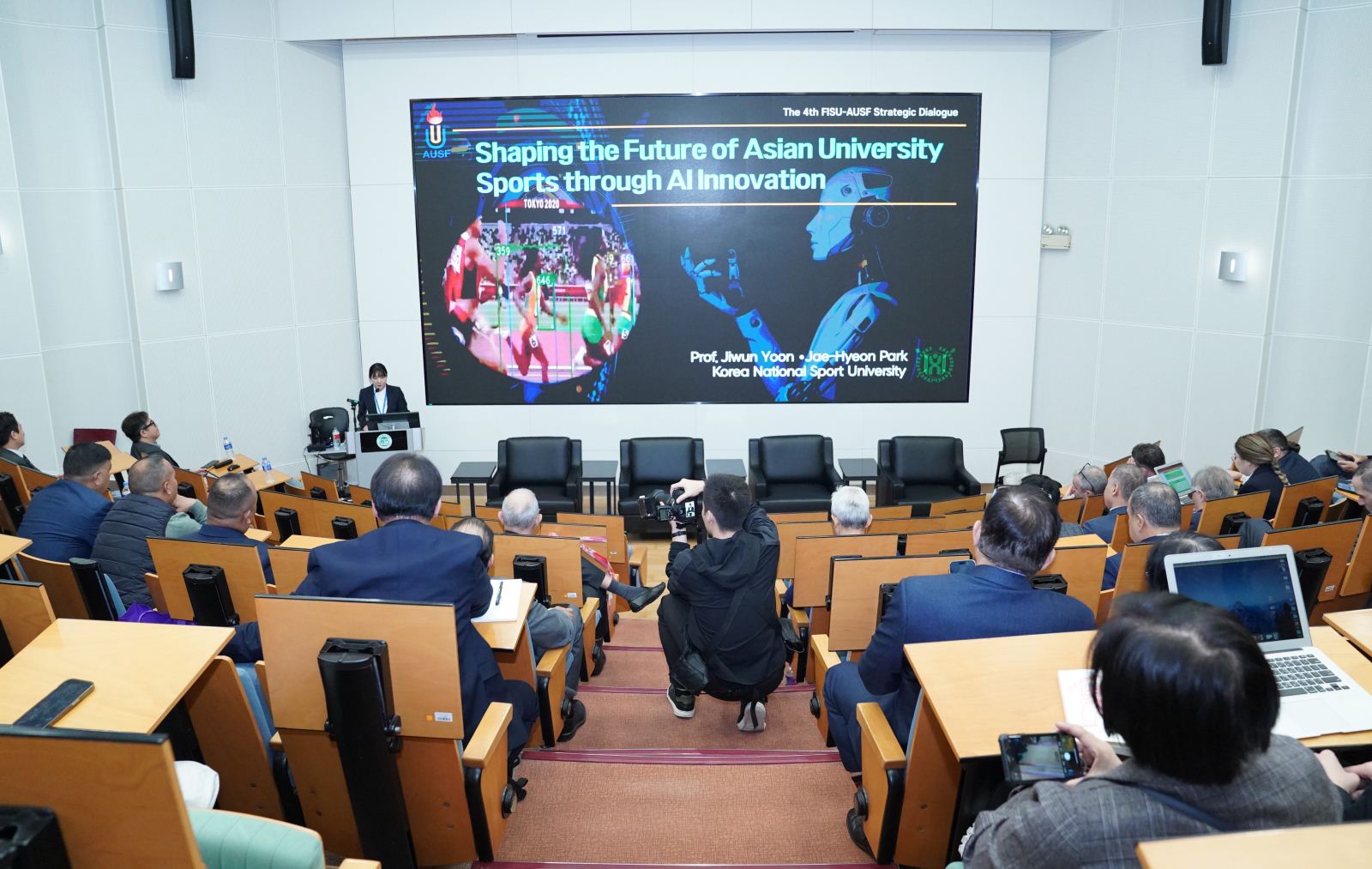
Professor Yoon identified disparities in performance and support levels among Asian universities. She suggested that “AI can reduce gaps and raise the overall level of sport across Asia”.
Professor Lee echoed that sentiment: “When universities make use of AI, sport becomes more fair, more efficient and more scientific.”
With the development of sports and especially students in mind, utilizing AI can accelerate the growth of university sport in Asia.
Besides the six presentations, the dialogue was supplemented with panel discussions led by the speakers, who were joined by FISU Secretary-General Matthias Remund for the morning session, and FISU President Leonz Eder in the afternoon session.
The dialogue session also included the Memorandum of Understanding (MoU) Signing Ceremony between FISU and AUSF, along with presentations of tokens of appreciation to the AUSF Secretariat who have been working tirelessly in the background to ensure that all events run smoothly.
To conclude the productive dialogue sessions, FISU President Leonz Eder reminded members that in making decisions for their respective federations, it is vital to consider “the needs of our student-athletes” as they are the main stakeholders of the partnership between FISU and AUSF.