




By Haleh Yarmohammadi, AUSF Student Media Contributor
5 August 2026
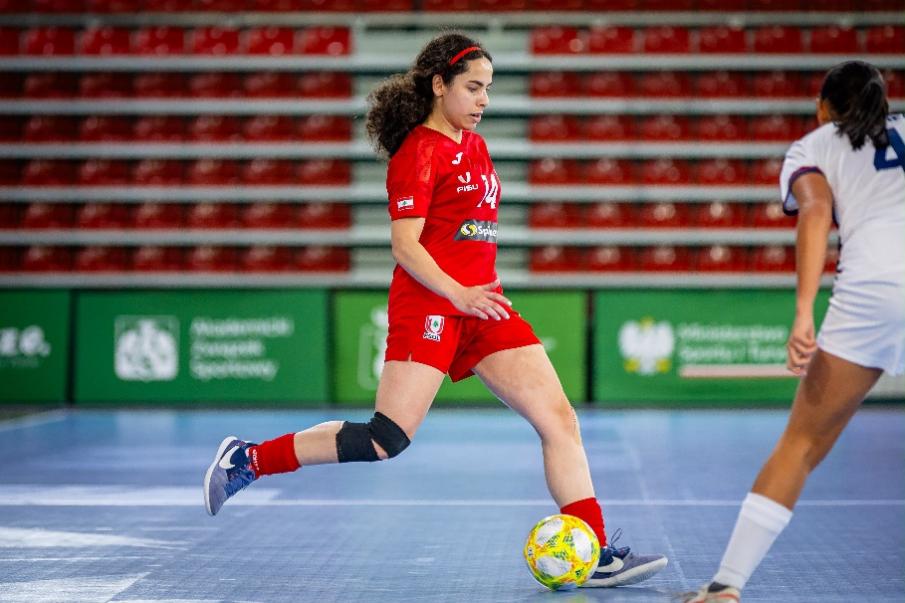
BEIRUT, Lebanon – Marie Joe Wakim spent nearly a decade studying the piano, but today, the main goal of the 24-year-old Lebanese futsal player is to build a professional career in the sport. Wakim has been playing futsal for nearly 14 years and now plays as a left winger. Her journey has taken her from the school court to the national team and now toward her dream of playing professionally in Europe.
A mechatronics engineering graduate of Lebanese American University, Wakim is currently pursuing a master’s degree in sport management at Saint Joseph University of Beirut (USJ). She has experienced competing internationally and hopes one day to play in one of the professional futsal leagues in Spain or Portugal, which she considers are among the leading futsal countries/regions in the world.
From Playing with Boys to the National Team
Wakim’s interest in futsal began when she was around 10 years old, at a time when her school did not yet have a girls’ futsal team.
“We didn’t have a girls’ futsal team at our school at the time, so I played with the boys for the first few years. After about two years, a girls’ team was formed. From then on, we started competing in different tournaments. We won some of them and gained valuable experience from others.”
Futsal was not Wakim’s only choice from the beginning. As a child, she tried different sports, including basketball and table tennis. But the more time she spent on the futsal court, the stronger her connection with the sport became.
“Little by little, I started focusing more on futsal and continued playing the other sports just for fun. When you enjoy a sport more and more, you naturally spend more time doing it, and that allows you to improve and become better every day.”
Wakim did not grow up in a family with a professional sports background. Her father exercised to stay fit, but sport was primarily a recreational activity for him. Today, Wakim and her sister are both involved in futsal and have represented the Lebanese women’s national futsal team.
Lebanese Futsal: A Path with Limited Opportunities
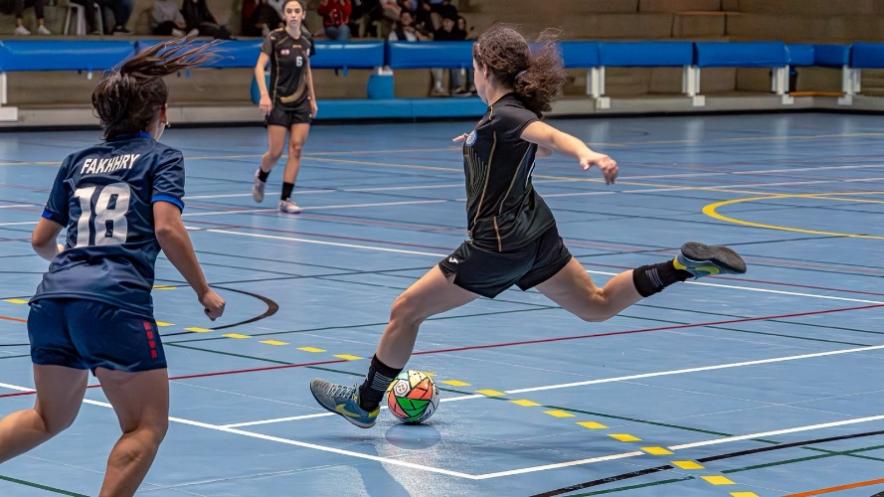
Wakim’s development has taken place against a backdrop of challenges facing women’s futsal in Lebanon in recent years. She believes the level of futsal in Lebanon remains respectable, but the sport is no longer at the level it reached during its peak, particularly in 2017 and 2018.
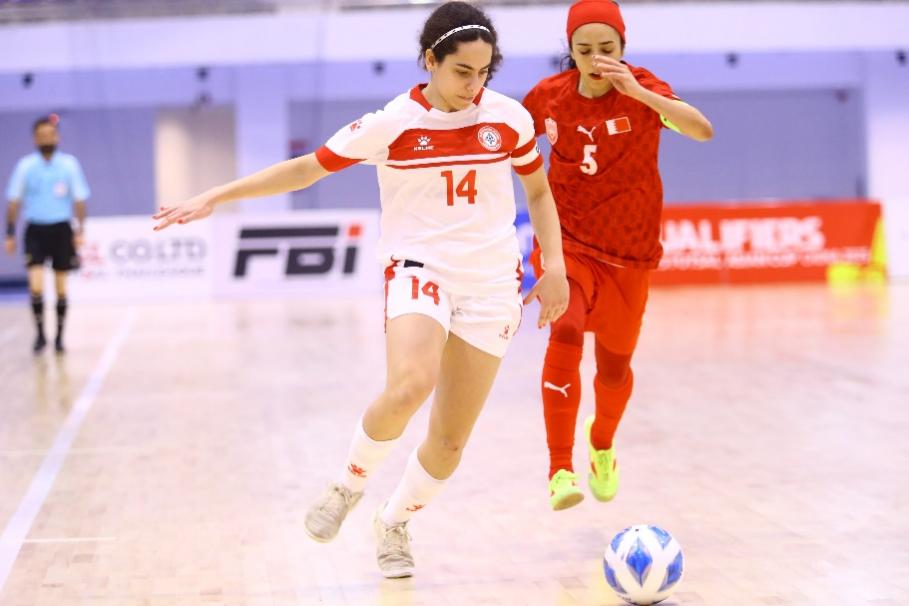
Wakim said the arrival of foreign players, including athletes from Brazil and Iran, helped raise the level of competition and brought greater attention to futsal in Lebanon. But that upward momentum did not last. The COVID-19 pandemic, Lebanon’s economic crisis, wars, and regional instability made the sporting environment increasingly difficult.
For Wakim, pursuing a futsal career also means balancing training with full-time work.
“We cannot rely solely on sport because the income from futsal is not enough, so we have to work at the same time. This makes things difficult because it limits the time we have for recovery, sleep, and training. Instead of getting seven to eight hours of sleep, I usually get around six to seven. It is not too bad, but things could be better if we did not have to work so much. Still, teams try to schedule training sessions at night so they do not conflict with our working hours, allowing us to prepare for competitions and perform at our best.”
The Dream of Playing in Europe
Her international experience, combined with the limitations facing futsal in Lebanon, has increasingly turned Wakim’s attention beyond her home country.
For years, she has dreamed of playing in a professional European league, with Spain and Portugal at the center of her ambition.
“As we know, Spain and Portugal have the highest level of futsal in the world. Playing in these countries is a dream, especially for players who come from countries/regions where futsal is still developing. Achieving this goal is not easy because we need a visa to live in Europe long-term, as well as the necessary authorization to sign a contract with a club. The process requires time and administrative procedures, but I still hope to compete at the highest possible level.”
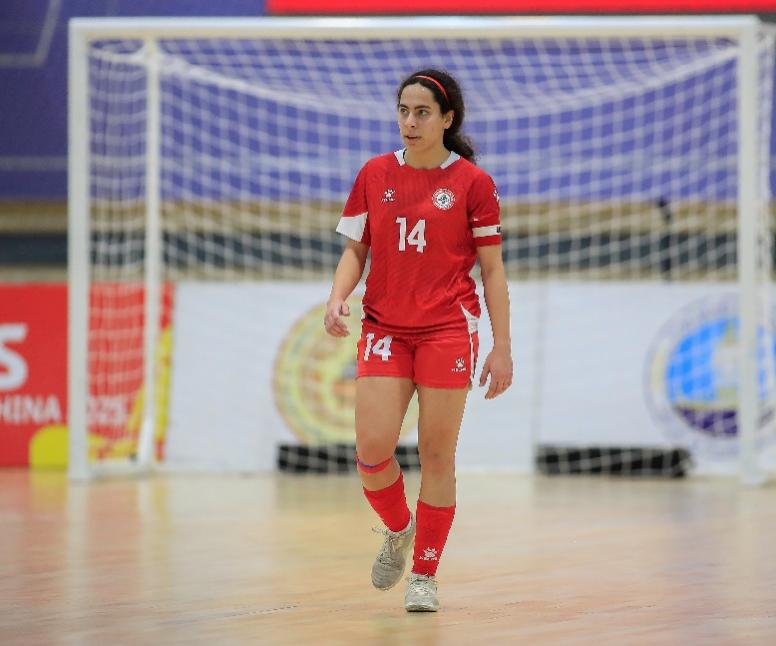
For Wakim, this goal is about more than her personal development. She believes the Lebanese national team’s recent performances have shown that, despite the limitations facing women’s futsal in Lebanon, Lebanese players are capable of competing against stronger teams.
In her view, greater support for women’s futsal, better training facilities, and the return of a domestic league could help Lebanese players close the gap with the world’s leading teams.
Life Beyond the Futsal Court
Futsal is an important part of Wakim’s life, but she also has interests beyond the sport.
She has loved table tennis since childhood and spent hours playing it with her father. In recent months, she has also taken up padel, which, she says, allows her to have fun, compete, and spend time with her friends.
Music is another important part of her life beyond the futsal court.
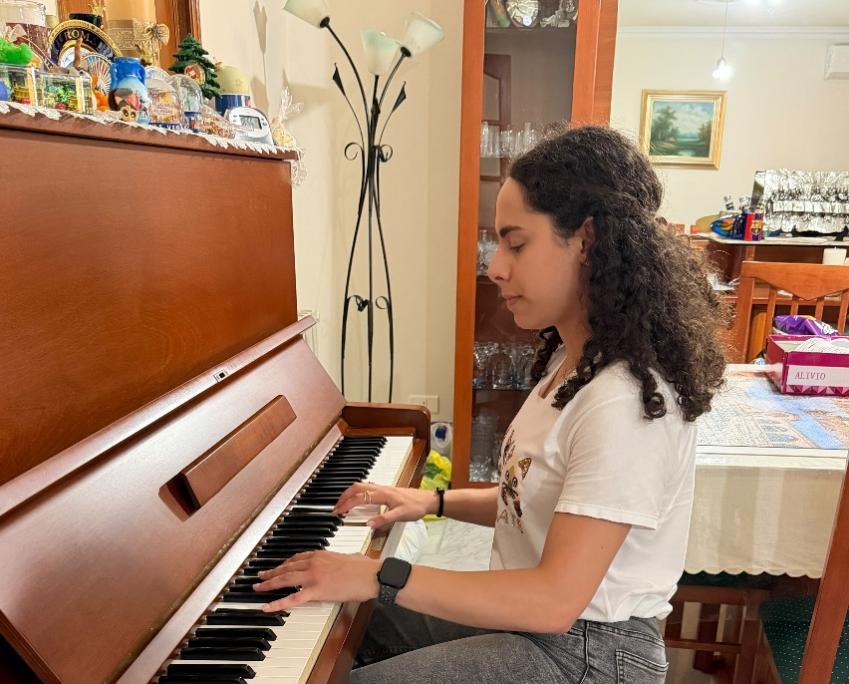
Wakim studied piano at the Lebanese Conservatory for around 10 years, but as her futsal commitments increased and she became involved with the national team, continuing her formal music education became increasingly difficult. Even so, the piano remains part of her life.
Marie Joe Wakim at the piano, continuing her childhood passion. Photo provided by Marie Joe Wakim.
“I still sit at the piano and play whenever I have the opportunity. Music remains one of my favorite pastimes and a way for me to relax.”
An Experience Beyond the Result at FISU
One of Wakim’s most significant international experiences in recent years came at the 2026 FISU World University Championship Futsal in July, where she represented Lebanon’s university team and had the opportunity to compete against some of the strongest teams in the world.
Wakim played as a left winger throughout the competition, using her dribbling ability, movement, and link-up play with teammates to contribute to the team’s attacking play. At times, when the team needed her to play deeper, she also took on the role of an anchor and playmaker, helping organize the game and contributing defensively.
Lebanon defeated Finland in the group stage but then lost to Germany, Brazil, and France. In the seventh-place match, the team defeated Costa Rica in a penalty shootout to finish seventh. For Wakim, however, the value of the competition went beyond the team’s final position.
“Regardless of our final ranking, which was a respectable result given the circumstances in Lebanon, the most important thing we gained from this tournament was experience. It showed us that, despite all the limitations, we can still compete at a high level and continue working toward a better future.”
For Wakim, competing against teams from countries/regions with more developed facilities and professional structures was a valuable opportunity to test her abilities at a higher level. She hopes the experience will help prepare her for the next stage of her career as she continues pursuing her dream of playing professionally in Europe.