




By Yebin Oh, AUSF Student Media Contributor
6 July 2026
Seoul, South Korea
Representing Korea on the University Stage
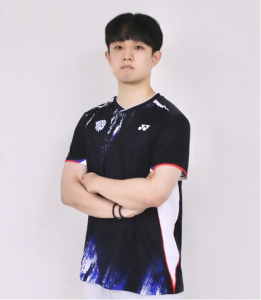
SEOUL, South Korea- “On the court, my opponents and I compete fiercely, but after the match we can talk, laugh, and support each other.” This is how Seungmin Park views his battles against Asia’s strongest university players. For the Korean badminton player, international competition is not just about the final score, but also about the friendships built through sport.
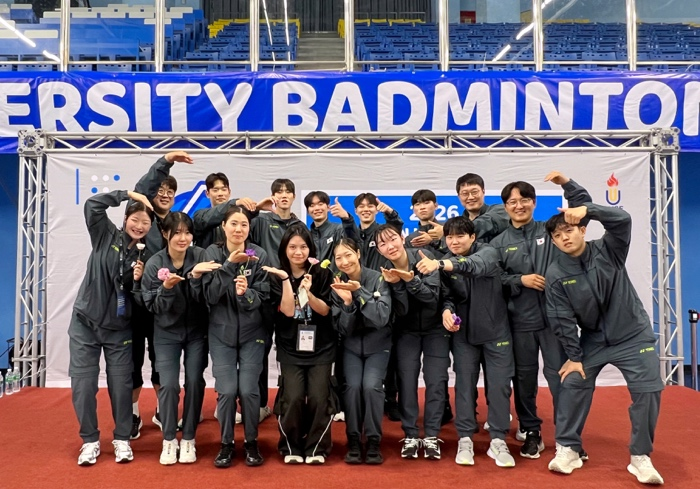
This philosophy has guided Park throughout his time as an elite student-athlete at Kyung Hee University, where he balances academics with elite sports. His extensive journey on the international stage includes representing Korea’s national team at the 2025 FISU World University Games in Germany, as well as his recent selection to represent Korea at the 2026 Asian University Badminton Championship in Chinese Taipei.
These opportunities reflect his years of dedication on and off the court, earning him a place on Korea’s national university team a special achievement. “At first, it didn’t feel real,” he recalled. “But when I saw the other players who had been selected alongside me, many of whom were already well-known athletes, I realized that I was truly part of the national team.
 Friendships Beyond Competition
In addition to the honor of representing his country, these international tournaments have provided Park with opportunities for cultural exchange. During the 2025 FISU World University Games in Germany, he formed friendships with Japanese athletes. Later training camps and international events also helped him connect with competitors from Malaysia and other countries/regions.
Recalling these memories, Park noted, “Sport helps people become close very quickly.” For him, building relationships with peers from different backgrounds remains one of the most rewarding aspects of his athletic career. Those experiences reinforced his belief that sport can connect people beyond language and cultural differences.
Lessons from International Competition
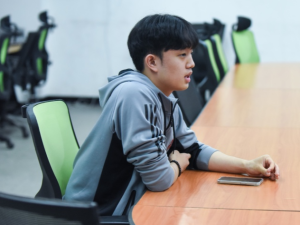
Beyond the social connections, competing overseas presents physical challenges, particularly in adapting to unfamiliar environments. Different venues, shuttlecocks, weather conditions, and even food can influence an athlete’s performance.
“When competing overseas, there are always variables that you don’t experience at home,” Park explained. “You learn how to adapt to different environments and how to take care of your body while traveling.”
Observing Asia’s Best
At the 2026 Asian University Badminton Championship, he had the opportunity to compete against and observe some of Asia’s strongest university players. He was particularly impressed by the physical strength of athletes from Chinese Taipei and the speed and endurance displayed by Japanese competitors.
“Even though we are all Asian players, there are clear differences,” he said. “Athletes from Chinese Taipei are physically very strong, while Japanese players are incredibly fast and have outstanding stamina.”
He also admired the mentality of players from powerful badminton delegations such as Indonesia and Malaysia, noting how their confidence stands out throughout a match.
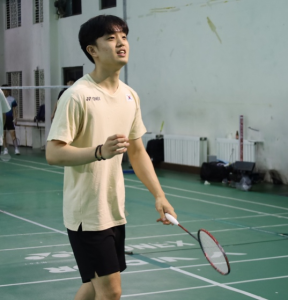 “They play with confidence and are not afraid of making mistakes,” he said. “Even after losing a point, they immediately focus on the next one. That is something I am still learning.”
Balancing Academics and Athletics
Away from competition, he faces another challenge familiar to many student-athletes: balancing academics with elite sport. During national team duties overseas, he often completed online examinations and submitted assignments while traveling.
“There were times when I attended class only a few times during the semester because of national team duties,” he said. “I had to take exams out of my country and submit numerous reports to keep up with my studies.”
Despite these challenges, he believes university sport has played a vital role in his personal development. “University sports help athletes grow both in their sport and in other areas,” he explained. “I have learned many things outside of badminton that will help me in the future.”
Looking Toward the Next Stage
Now preparing for the next stage of his career, he hopes to perform well in upcoming domestic competitions, earn future national team selections, and establish himself at the professional level.
When asked to describe badminton in a single phrase, he smiled before answering, “My greatest challenge.”
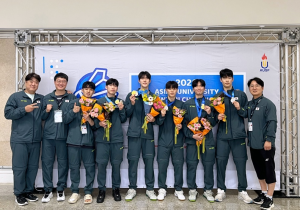 The answer reflected the highs and lows of a life dedicated to sport. Badminton has brought him moments of joy, frustration, achievement, and disappointment. Yet through every challenge, from balancing academics and athletics to representing Korea on the international stage, he continues to grow as an athlete, a student, and an ambassador of university sport.