



More Than a Game: Experiencing the Yonsei-Korea Rivalry
By Yebin Oh, AUSF Student Media Contributor
27 October 2026
SEOUL, South Korea — The annual Yonsei-Korea Games bring together five sports, passionate supporters, and athletes who compete with pride for their universities. Yonsei University basketball coach Cheon Jae-min reflects on the atmosphere, traditions, and meaning behind one of Korean university sports’ most anticipated events.
Students Cheering for Their Teams. Photo by Yebin Oh.
For university athletes, representing their university means more than competing for a result. It means carrying the pride of their community onto the court, field, or rink. This sense of responsibility is especially evident at the Yonsei-Korea Games, the annual sporting rivalry between Yonsei University and Korea University.
Featuring five sports, including baseball, basketball, ice hockey, rugby, and soccer, the event brings athletes and supporters together in a celebration of university identity and competition. The enthusiastic crowds and the significance attached to representing each university distinguish the Games from regular university league matches.
Cheon Jae-min, a coach for the Yonsei University basketball team, has experienced the rivalry as both a player and a coach. He competed as a player before returning to the event as a coach. Through these experiences, he has seen how the atmosphere of the Games can shape the way athletes approach competition and remember their university years.
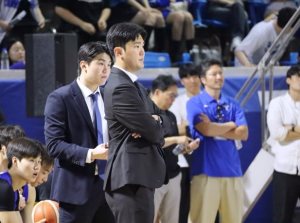
Cheon Jae-min at the Yonsei-Korea Games. Photo by Yebin Oh.
A Different Atmosphere from a Regular Game
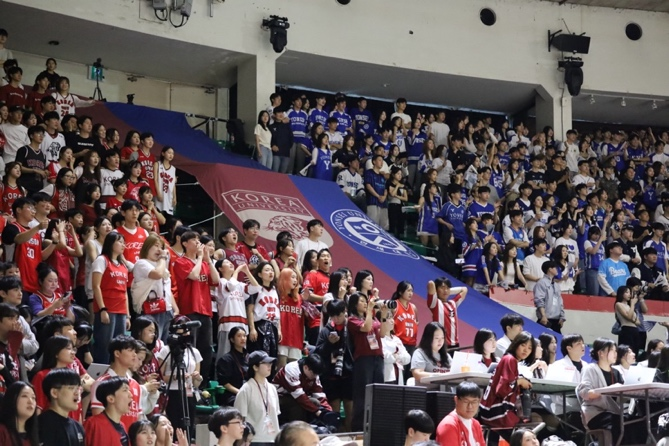
One of the defining features of the Yonsei-Korea Games is the energy created by the supporters. Cheon recalled playing at Jamsil Indoor Stadium as a university student, where the large crowd created an atmosphere unlike that of an ordinary game. For the athletes, competing in front of so many supporters adds another dimension to the experience.
The rivalry is also remembered through moments of celebration. Cheon’s most memorable Yonsei-Korea Games experience came in his fourth year, when he served as captain and Yonsei secured a victory.
“After the final buzzer sounded, I remember thinking, ‘Wow, it’s over.’ I could hear the cheers from the students, and people around us rushed onto the court to congratulate us. My teammates also lifted me into the air in celebration,” Cheon recalled.
His memory captures how the Yonsei-Korea Games extend beyond the result itself, bringing players and supporters together in a shared moment of excitement and pride.
Cheon has also experienced the same rivalry as a coach, and he says the feeling of victory changes with the role. “When I was a player, I was simply excited because of the endorphins. As a coach, I felt a sense of pride and think, ‘The players have done well.’”
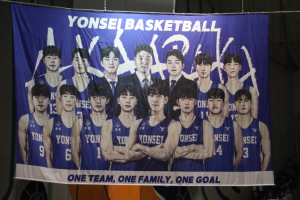
A banner featuring the Yonsei University basketball team on Yonsei-Korea Games Day.
Photo by Yebin Oh
His perspective highlights another side of the event. While supporters celebrate the result, coaches also recognize the preparation, effort, and teamwork that lead to it.
Traditions That Build Team Spirit
The rivalry’s significance extends beyond the game itself. For athletes, the opportunity to represent their university in such a highly anticipated event is an important part of their university experience. The support from the stands and the expectations surrounding the rivalry can give the players an additional sense of responsibility.
At Yonsei, preparation for the basketball rivalry includes a distinctive team tradition. After the U-League (KUSF University Basketball) concludes ahead of the Yonsei-Korea Games, the team trains with its fight songs playing at high volume.
The tradition connects preparation with university identity, reminding players that they are not competing only as individuals or as a basketball team, but also as representatives of Yonsei. It helps create a shared atmosphere before they take the court.
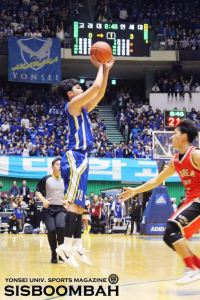
Cheon Jae-min as a Player. Photo provided by the SISBOOMBAH.
Cheon believes players need to understand the significance of the event when they compete. The Yonsei-Korea Games are not simply another fixture on the university basketball calendar. They are an occasion in which the athletes’ efforts become part of a much larger experience shared by their university community.
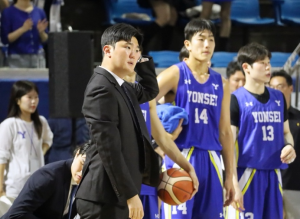
Cheon Jae-min at the Yonsei-Korea Games. Photo by Yebin OH
The Games bring together the history of the rivalry, the dedication of the athletes, and the enthusiasm of the supporters. Through five sports, students and athletes share an experience shaped by competition, tradition, and pride in their universities.