




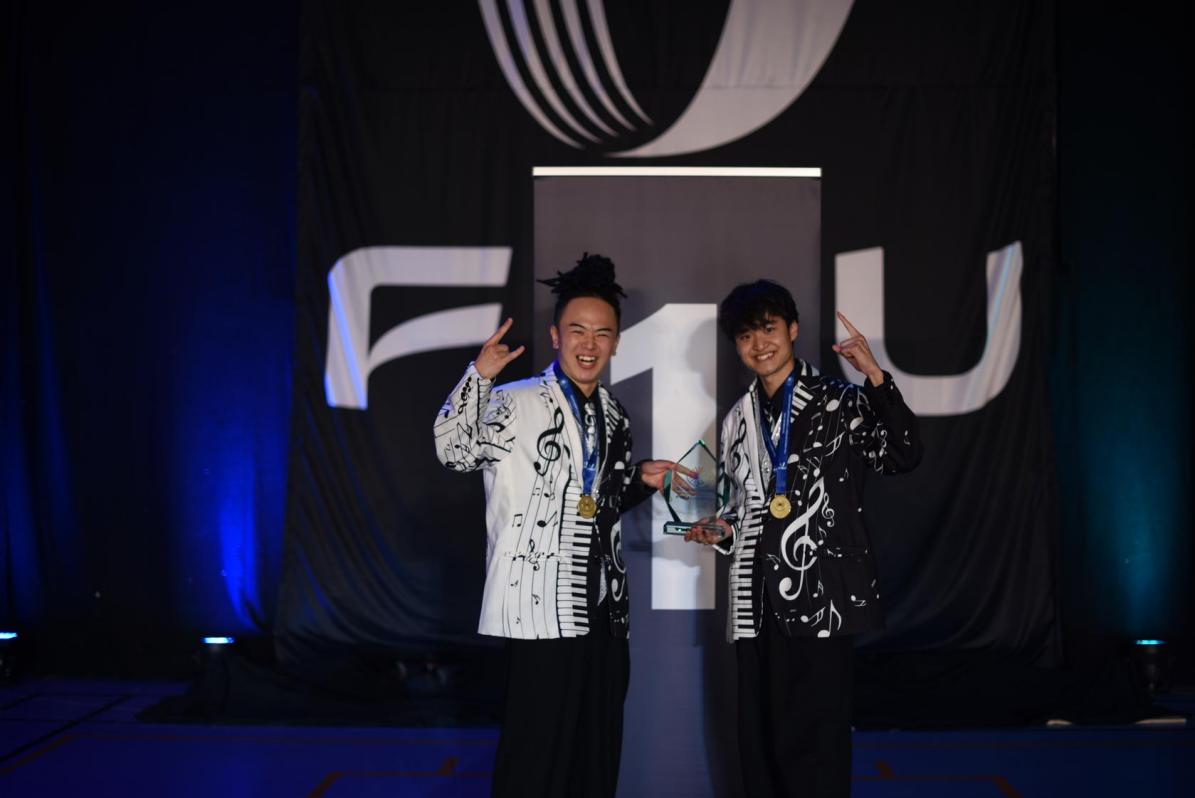
By Satori Naito, AUSF Student Media Contributor
5 August 2026
TOKYO, Japan – After eight years performing together, Japanese hip-hop duo Takeru Shibata and Yoshihiko Niwa successfully defended their Hip Hop Doubles title at the 2026 FISU World University Championship Cheerleading in Gothenburg, Sweden, in June. They impressed the crowd with their synchronization. Surprisingly, the duo said they rarely cross paths in their daily lives offstage. What, then, brings their individual strengths together when they step onto the competition floor?
Takeru and Yoshihiko are currently members of World Wings 2WDC, a Japanese performance cheer team. Takeru graduated from Soka University in March 2026, while Yoshihiko is a fourth-year student at the university. Apart from dance practice, they rarely interact, even when they attended the same classes. Their preparation and routines before each performance therefore play an important role in maintaining their teamwork.
Before taking the stage, they share a high-five and a hug as part of their routine to stay calm and focused. Yoshihiko also openly discusses his physical and mental condition with Takeru before every performance, including when he feels tired or hesitant.
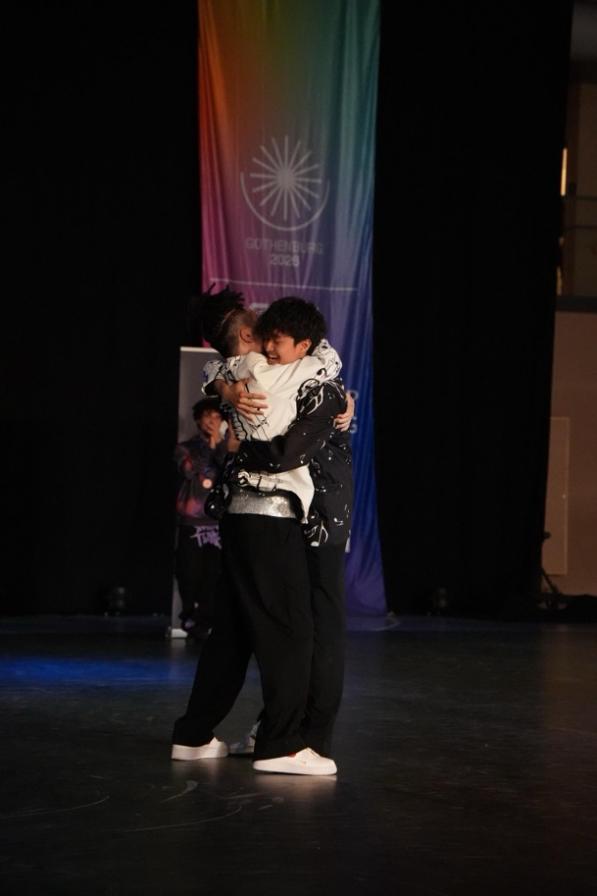
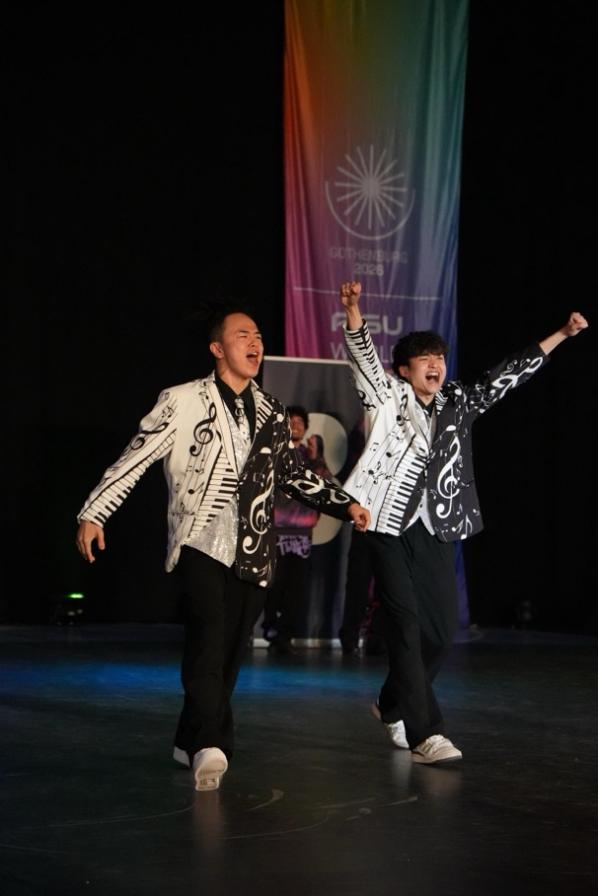
While waiting for the final results in Sweden, both athletes felt extremely nervous. “Our hearts were beating so fast, and we couldn’t stop fidgeting until our names were finally called,” they recalled. “The moment we heard we won first place, I was so happy that I couldn’t put it into words,” Yoshihiko said. “Even now, that moment is still fresh in my memory.”
Although their private lives ran in parallel, both were inspired by family members to enter the world of dance. Takeru, a native of Hyogo Prefecture, discovered dance in first grade after his father introduced him to Michael Jackson’s performances. Inspired by the pop star’s rhythm, he enrolled in a local dance school and competed throughout junior high and high school. In contrast, Yoshihiko, from Osaka Prefecture, grew up playing baseball from the age of three. He decided to switch to dance in high school after watching his sister compete in a dance competition, drawn by the artistic freedom of the sport.
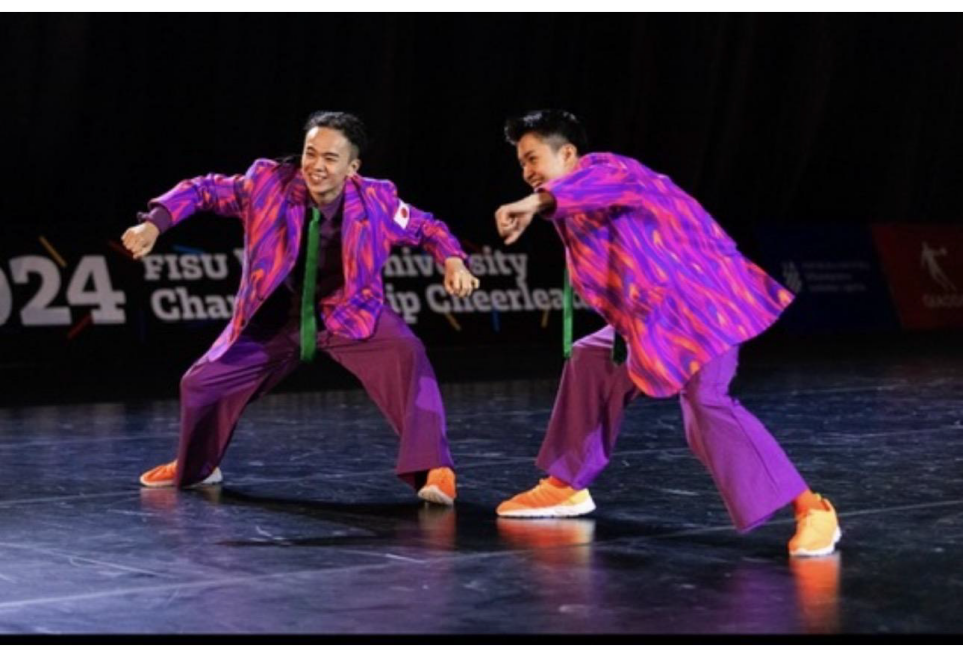
Through World Wings 2WDC, they have competed in various major competitions and won several medals over the years. They won their first FISU title together in Croatia in 2024 before defending it in Sweden in 2026. Looking ahead, Takeru and Yoshihiko hope to compete together at the ICU World Cheerleading Championships in April 2027. They also plan to perform at domestic events to promote cheerleading across Japan
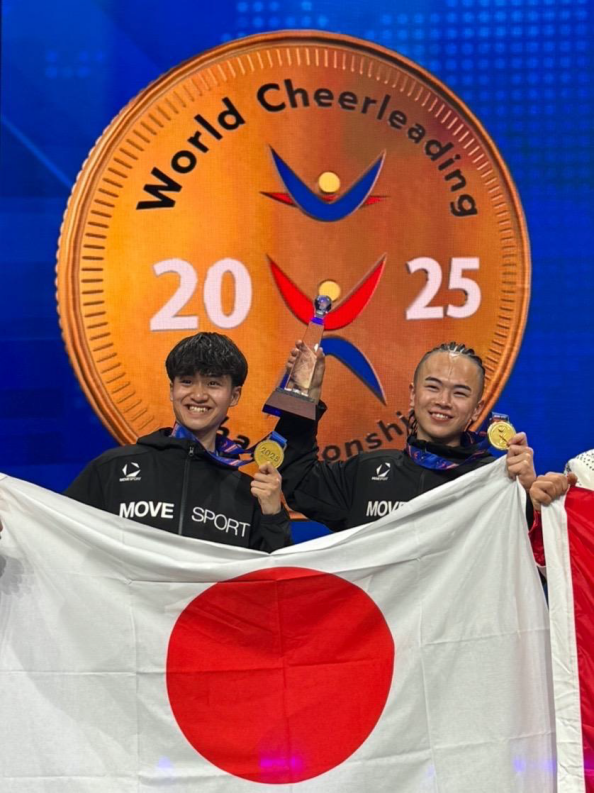
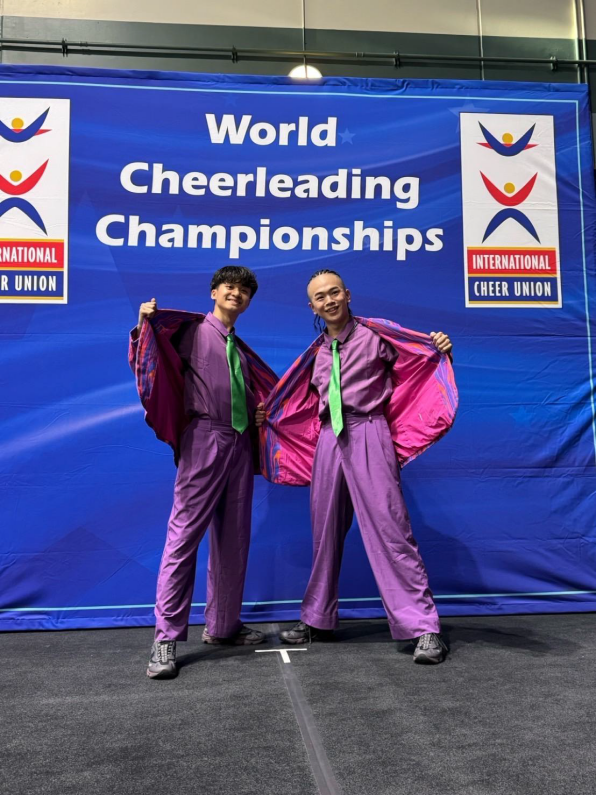
Yoshihiko hopes the discipline will gain greater recognition on the global stage. “My dream is for performance cheer to be included in the Olympic Games,” Yoshihiko said, adding that increasing the sport’s popularity is an essential step toward achieving that goal.
Finally, both athletes shared advice for aspiring university competitors. “There is no single correct answer in dance,” Takeru said. “It is a way to express yourself in your own unique way. Dance authentically and enjoy it from the bottom of your heart.”
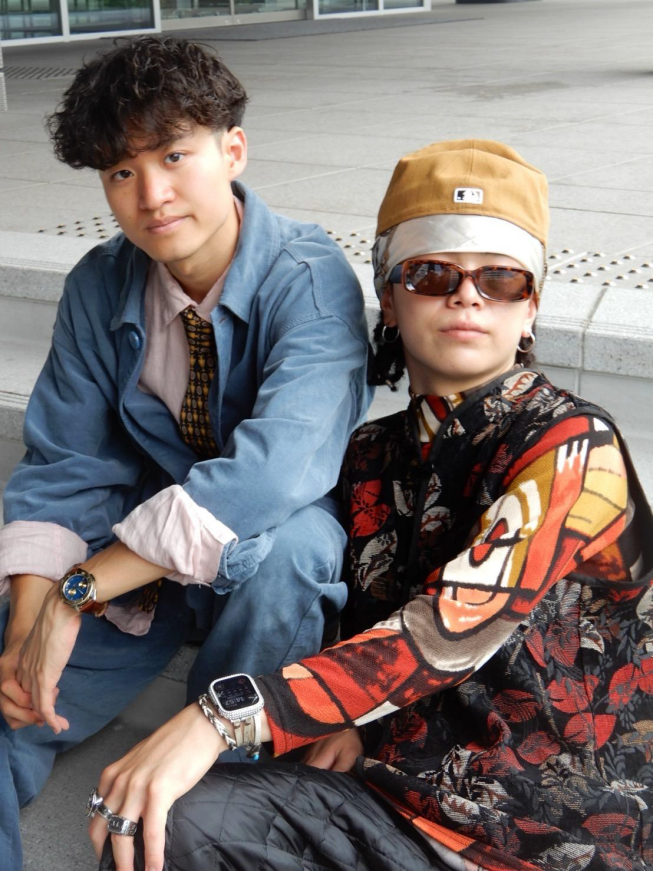

Yoshihiko reinforced the importance of persistence. “Possibilities are infinite,” Yoshihiko said. “No matter how high the wall seems, continuous effort will make your dreams achievable. Believe in yourself and keep moving forward.”